
News
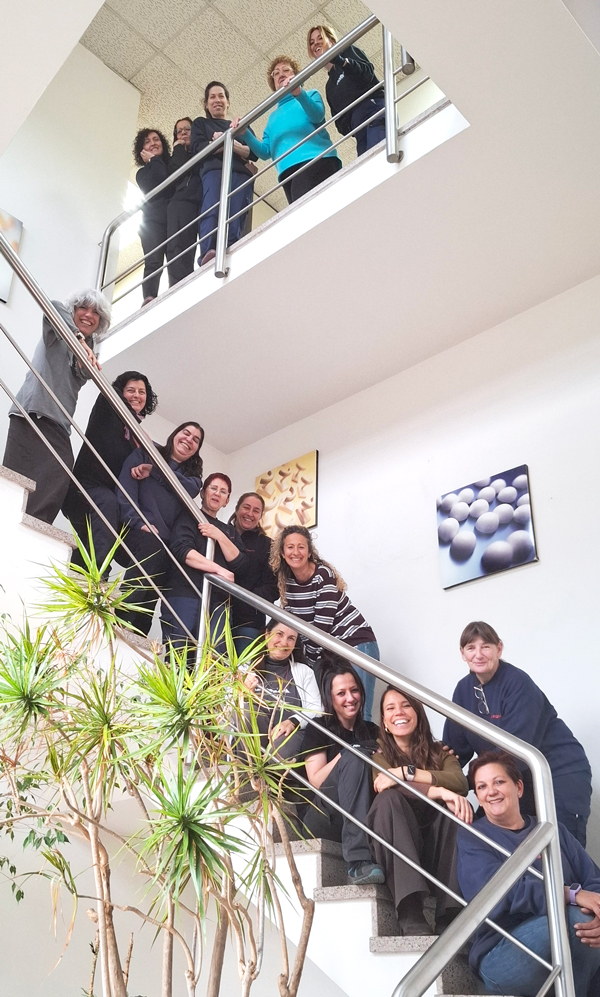
8M: the hardware and DIY sector is also being built in the feminine
March 8th, International Women's Day, is a day to recognize progress, but also to demand what still needs to be done. In the world of hardware, DIY, and industrial supply, the presence of women is not a passing trend: it is a growing reality and, above all, essential for the sector's evolution.
Currently, it's important to be transparent with the data: there are no "standard" public statistics that accurately publish the percentage of women in management positions specifically in the hardware/DIY/industrial supply subsectors, as we understand them commercially, for Catalonia, Spain, and the European Union. What does exist—and is the most comparable—is a snapshot of women in management/executive positions across the economy as a whole (retail, consumer goods, and large stores, which includes part of the hardware and DIY business).
Within this framework, the most reliable "map" available shows that in Catalonia, women hold 33.4% of management positions; In Spain, women's presence in management positions stands at around 34.42% (directors and managers) and 35.15% (senior management), according to the INE's SDG indicators (2024). A recent study provides similar data for the European Union: women occupy 35.2% of management positions.
The key is not just the figure itself, but its interpretation: progress exists, but it is not advancing at the same pace in all environments. We can see progress in formal structures (organizational charts, policies, access to positions), while in day-to-day life—in the shop, at the counter, in the warehouse, or on the construction site—inertia and stereotypes persist, slowing down true normalization.
What do these figures tell us? That progress is real, but still insufficient; and, above all, that behind each percentage are professional journeys that have not always been easy. Because the challenge isn't simply "being" in the sector: it's about progressing, being heard with the same technical authority, accessing equal opportunities, and exercising leadership without implicit penalties.
And here we see a reality that International Women's Day invites us to confront: cultural changes often lag behind organizational changes. Even though we see more women in positions of responsibility, in everyday practices at the street level, jokes, comments, imitations, or inherited gestures—sometimes out of habit, other times "for a laugh"—may still persist, and these, collectively, undermine professional credibility and force many women to prove themselves more in order to be recognized equally.
Breaking Stereotypes: From “They Don’t Take Me Seriously” to Visible Leadership
For years, many female professionals have had to live with an invisible barrier: prejudice. In a historically male-dominated sector, it wasn't unusual for a woman to constantly have to provide her knowledge of tools, fasteners, adhesives, safety, hardware, or industrial solutions; or for his technical expertise to be questioned before the conversation even began.
And although this reality is changing, it's doing so slowly and unevenly. In some environments, the evolution is evident; in others, remnants of the past persist: from “let me speak with your colleague” to outright surprise when a woman leads a technical decision. Sometimes it manifests in micro-behaviors: jokes, catchphrases, condescending tones, or unnecessary “tests.” It's not always done with ill intent; sometimes it's simply imitation of what has been learned. But the effect is all too similar: it hinders normalization.
This International Women's Day also serves to highlight something clearly: stereotypes limit individuals and hold back the industry. When talent is lost due to a lack of opportunities, respect, or role models, the entire industry becomes less competitive.
Change is happening and it's visible: more and more women are occupying positions of responsibility in stores, chains, manufacturers, and industry organizations. But the challenge is no longer just "getting there," but consolidating that position: ensuring that recognition becomes automatic, that female leadership is not perceived as an exception, and that daily life—the conversation at the counter, team coordination, or relationships with suppliers—doesn't perpetuate inertia. In other words: moving from statistical progress to true normalization.
More diversity, better service: the customer has changed (and so has the counter).
The modern hardware store is defined not only by the products it sells, but also by how it recommends them and how it supports the customer. The market has changed: today's customer compares, consults, seeks clear solutions, and values the entire experience (from the shelf to installation). In this context, the counter becomes a space for expert advice, and the diverse and well-trained team makes all the difference.
Adding more women to the sector isn't about "meeting quotas": it's about improving the value proposition. A diversity of profiles brings new perspectives to understanding real needs: from those seeking a quick solution for the home to those requiring a precise technical answer for a professional environment. More diverse teams tend to be teams that listen better, communicate better, and solve problems better, and this translates into loyalty and growth.
Network, Community, and Role Models: When shared, change accelerates.
In recent years, initiatives and events have emerged that help to increase the visibility of women in the sector, create connections, and strengthen a sense of belonging. Networking and community spaces serve a very specific purpose: exchanging experiences, sharing knowledge, and creating relatable role models.
This is especially important in sectors where many professionals have worked for a long time in environments where they were a minority. When there is a network, there is support. And when there is support, talent is retained, nurtured, and projected. It's not just about "being present," but about being able to grow, lead, and be recognized.
Moving from message to action: keys to true normalization
Reclaiming International Women's Day (March 8th) from a sectoral perspective means going beyond mere gestures. Some actions that can have a real impact in hardware, DIY, and industrial supply include:
Visibility of real role models
Giving space to store managers, technicians, product specialists, warehouse professionals, operations managers, executives, and sales professionals. Representation matters: if the value of a profile can be demonstrated, why not encourage it?
Ongoing technical training
Knowledge is the friend of equality. Specialization in product families, regulations, installation, safety, or tools strengthens professional commitment and opens up career opportunities.
Environments of respect and zero tolerance
Avoid practices that question or minimize a woman's competence simply because she is a woman. Equality is also built in everyday life: in how we treat each other, in shifts, in opportunities, and in how we listen to our colleagues.
Work-life balance and realistic organization
Retaining talent means facilitating sustainable career paths. Consistent policies and flexibility, whenever possible, help build stable and committed teams.
Community and mentorship
Connecting junior profiles with experienced profiles accelerates learning and reduces feelings of isolation. Mentorship is not just "guidance": it's knowledge transfer.
Inofix's commitment: making value visible (including the value of people)
At Inofix, we believe that the transformation of the sector is achieved through innovation, yes, but also through team culture and a cross-functional vision. Investing in continuous improvement in marketing, sales, and operations means listening more to the market, coordinating better internally, and building a more consistent experience for customers and distributors.
In this evolution, female talent is a key element. Not just symbolically, but in reality: because every woman who leads, advises, designs processes, organizes the warehouse, drives communication, negotiates categories, or improves logistics is raising the industry standard.
This International Women's Day, we want to recognize the work of all the women who make today's hardware and DIY stores possible. And, at the same time, reaffirm a simple idea: a more equitable sector is a more modern, more competitive sector, better prepared for the future.
Related news: Inofix strengthens its Marketing, Sales, and Operations departments.
Innovation in hardware and industrial supplies: from the counter to the "store retail" hardware store (ideas and lessons learned after Expocadena)
INOFIX thanks Jordi Albaladejo for his contribution and strengthens its organisation across Marketing, Sales and Operations
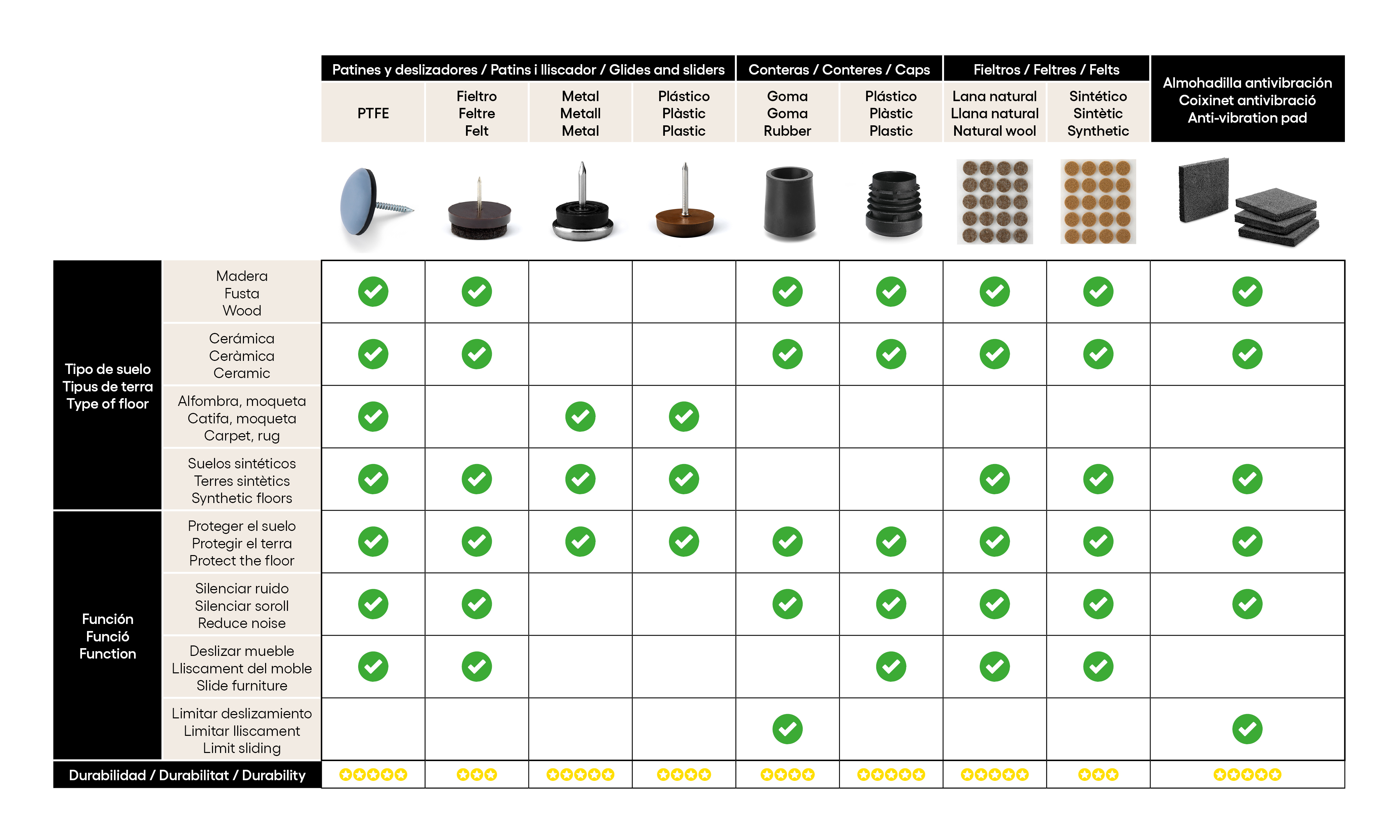
Furniture accessories: end caps, gliders, felts, and pads
Feria PROFER 2025